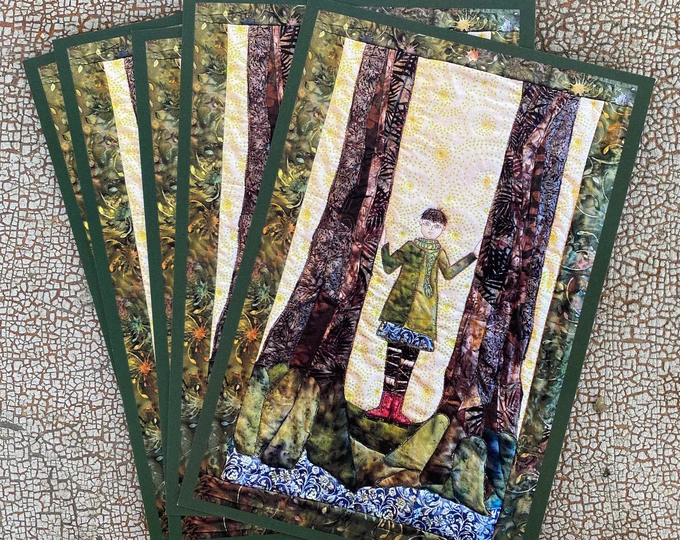
The rag rugs made over the summer at the Community Weaving Project
When I got to the Cambridge Historical Museum last night people were carrying food from their cars to the front porch of the Victorian House. I could smell the hot, home made cider before I saw it.
It was the celebration of the success and end of the Community Weaving Project. Not that’s it’s really over. It’s on a winter break and there’s talk of it continuing in the warmer weather.
The idea behind the project was to create a space where everyone was welcomed. A space that wasn’t politically charged. To give anyone who wanted, a chance to weave on the 300 year old loom. And to introduce weaving go people who had never done it or even thought about it, and maybe even inspire some new weavers. And to make rag rugs that would be raffled off to everyone who participated.
Over 200 people came to the barn behind the Historical Society where the loom was housed. And that doesn’t include the people who donated old sheets, curtains and fabric to make the rag rugs from.
The youngest person to weave on the loom was 4 years old. Someone else had to press on the treadles because her legs weren’t long enough to reach them. The oldest person was 93 years old.
All those people, along with the professional weavers who taught them, made seven rag rugs over the summer. And last night was the raffle to give the rugs away.
One of the rugs went to the man who repaired the loom when the 300 year old chestnut split and stalled the weaving. He just happened to be there with his family on that day and just happened to be a woodworker and engineer. Just the person needed to repair the loom.
I got to choose a rug too, for helping out when no one else could. I chose the small bright pink and blue rug on the table in the photo above, and was very happy to receive it.
I was seduced by the 300 year old Loom I told Adina, who I worked with over the summer. As a professional weaver, she knew all about it.
I still don’t know what it is that draws me to that loom. Something deep and very old for sure.
And although I’m not very comfortable around large groups of people I don’t know very well (I even left for a while and took a walk around town) , I was glad to be there last night. Glad to have been a part of the Community Weaving Project and to have met the people I did. I learned a lot and got sucked up in the passion and enthusiasm the other people who participated.
Susannah, who is responsible for the Community Weaving Project along with Stephanie, asked me if I still wanted to get text messages from the group. To be included in what they were doing.
And I do.
I still have a bunch of marigolds drying in the upstairs bedroom that I intend to do some natural dyeing with. Something I swore I’d never do, until I went to the plant dyeing demonstration that was part of the Community Weaving Project and got inspired.
I guess it worked.
Adina and Susannah at the Cambridge Historical Society last night.
Anne and Adina weaving on the 300 year old barn loom
My friend Anne showed up at the Cambridge Community Weaving Project on Saturday. I was there helping Adina who is one of the weavers running the project.
Anne was our bookkeeper for many years, which is how we met each other and became friends. I didn’t know it but she’d been to the barn behind the Historical Society to weave rag rugs on the 300 year old loom, before.
While Adina showed Anne how to finish off one rug and begin another, I welcomed some of the other people who showed up and answered the questions I could.
One the visitors, Anne at the Loom and Adina
Then Elizabeth, a former business owner in town showed up. After she did some weaving, she and I tied off the end of one of the finished rugs from the previous weeks.
Me and Elizabeth tying off the rug Adina took this photo
We did a simple overhand knot working from each end and meeting in the middle.
When we finished one side, Adina laid out the rugs and cut them apart. Then she and Elizabeth tied the ends of the rest of the rugs, while I did some weaving with Anne’s help.
The rug we started yesterday
There was a real sense of all of us working together yesterday.
Everyone who wanted to, got a chance to weave. It’s not easy to remember the small details of weaving on the big old loom, especially when there are weeks between when I haven’t done it.
So Adina helped Anne, then Anne helped me.
There is always something that needs to be done, while someone else is weaving. Fabric needs to be cut into strips, shuttles and bobbins need to be wound and tassels need to be tied.
Everyone there easily moved from one task to another being mindful that everyone else got a chance to do what they wanted.
I won’t be there next week, but I will be back for the Plant Dyeing Demonstration on September 27th from 1-4pm. That will officially be the last day of the Community Weaving Project.
So far there have been over 200 visitors to the Community Weaving Project. Everyone who participated in it will be have a chance to win one of the rugs that were made over the summer.
There is some talk of trying to find a heated space for the winter to keep the Weaving Project going. It think it’s a wonderful idea, and hope it happens.
Because the 300 year old loom is big enough to sit and walk in it takes more than one person to wrap the warp strings around the beam, which is big wooden cylindrical spool on one end of the loom. ( You can see it on the right in the photo below.)
As the weaving progresses the warp strings are released from the beam until the warp runs out.
Stephanie got there long before me to warp the loom. That means pulling the warp strings though the string heddles and the reed then tying the warp to them. The design of the finished weaving depends on how loom is warped.
When I was weaving I always found warping the loom to be tedious and time consuming. But to Stephanie, it is just a part of the process. I imagine it’s how true weavers feel, just as I embrace creating my quilts as much as tacking them.
Tying the warp strings
We didn’t get to the beaming today, but while Stephanie tied the warp strings, I chose fabric that would work well with the colors of the warp strings. All the fabric was donated from people in the community.
Then Stephanie showed me a technique of cutting the yards of fabric into strips so they don’t have to be sewn together. The fabric is the weft, what will be woven into a rag rug.
This weekend more volunteers will be at the Barn behind the Cambridge Historical Society on 12 Broad Street in Cambridge NY to show people how to weave a rag rug on the old Barn Loom.
The weaving will continue every Saturday until the end of the month. On Saturday September 27th, there will be a plant dyeing demonstration from 1-4pm.
I’m looking forward to learning how to use natural dyes. I’m hoping to learn how to dye some of the white Vintage hankies I have so I can make them into scarves.
The start of a rag rug on the loom at the Cambridge Historical Society
I went back to the Community Weaving Project at the Cambridge Historical Society this Saturday.
I did get to do a bit of weaving, but there were other people there who wanted to try too. That’s what it’s all about, people who visit getting a chance to weave on the three hundred year old loom.
Everyone who does can leave their name and phone number and when the project is over they will have a chance to win one of the rag rugs that have been made throughout the summer.
Weaving on this big old loom is different from weaving on the looms I’ve worked on before. And it’s been a long time since I did any weaving. But I know the basics well enough to catch on quickly.
Stephanie who is a weaver and part of the project also showed us how to cut the fabric for the rag rugs. They are using wool for the first rug. The size of the strips of fabric vary depending on the thickness of the wool.
This way the strips of fabric will all be about the same size when woven in to the rug.
I’ll go back the Saturday after next and spend more time getting to know the loom and how to weave on it good enough so I can teach the people who visit.
The project will continue throughout the summer on Saturday’s from 1-4pm in the barn at the Cambridge Historical Society.
The 300 year old loom is set up in the barn behind the Victorian house, which is the home of the Cambridge Historic Society on Broad Street in Cambridge NY.
I carried two paper bags of fabric and sheets that I’ve had a long time and haven’t used through the rain to the barn. I was there for The Community Weaving Project. For the next few months the Historical Society is asking people to bring their old sheets and fabric to be used to weave rag rugs on the 300 year old loom.
(For more information on The Community Weaving Project you can call 518 350-o627 or come to the Historical Society at 12 Broad Street Cambridge NY 12816 on Saturdays from 1-4pm)
Inside the barn Stephanie Morton and Kaatina Wirrkki, were finishing up warping the loom. We introduced ourselves and then they got back to work.
I was happy to be able to help them.
Stephanie sitting at the loom demonstrating how to tie the warp thread to the apron
I got to help place the reed and tie the warp thread onto the apron. Then I helped attach the first and third heddles and the second and forth heddles to two of the four foot peddles called treadles.
This way when someone presses on the first treadle with their foot, two heddles threaded with wrap thread will go up while the other two stay down. Then a shuttle with strips of fabric wound around it can be passed between them. Finally the fabric is pushed into place with a beater bar.
Then the opposite heddles are raised and the process repeats itself to create a simple weave.
Kaatina passing the shuttle with fabric on it through the warp threads
I am entranced by this old loom.
The first time I saw one I was captivated by the beauty of the patina of the wood and how all its edges were worn smooth by so many hands. By the big wooden pegs that held it together, and the simplicity of the mechanisms that made it move.
The warp treads are wrapped around the warp beam (above) and loosened as a person weaves
I was also mystified by how it worked. It looked more like a musical instrument to me than something that would create cloth.
After I learned to weave on a contemporary floor loom, instead of being diminished, the magic of the loom intensified. Because now, with its help, we were creating cloth.
The heddles (the white knotted threads) with the warp thread (the black threads) going through them. I was sitting under the loom when I took this photo
I know weaving can be tedious, back breaking and boring. If I had a loom in my barn and had to weave the cloth for the clothes Jon and I wear and use in our everyday lives, I might not be so enamored with the process.
But I was able to be creative with my weaving. I worked the patterns without really understanding them and how the colors I chose would look together. I didn’t know what I was making would look like until I had done it.
So it was a constant surprise and delight to see it all come together.
But weaving on one of these big old wooden looms that people have been weaving on for 300 years, adds a whole other dimension to it.
When I was weaving it made me feel connected to something bigger than myself. It was if I were entering into a world that had been closed up to me for lifetimes and I was finally invited back in.
Maybe that is part of the appeal of the old loom to me. That connection to humanity, past and present.
This loom was dated by the saw blade used as stop on the cloth beam.
I never got to actually weave on Saturday. I had to leave before the loom was ready to go. But I’ll go back next Saturday and see if I can’t get a chance to do some weaving then.
The Historical Society was depending on a grant to help support The Community Weaving Project, but now, because of all the government cutbacks, they’re not sure it’s going to come through. The original plan was to have someone there weaving from 1-4pm every Saturday throughout the summer.
So far, even without the grant, they are planning on going ahead with the project.
And I’m planning on going there throughout the summer too. I want to weave when possible, help cut up the fabric for the rag rugs and see how the rugs look when they’re done.
I can’t remember the last time I was drawn to do something creative like this outside of my own work. It’s a wonderful opportunity and so close to home.
The Community Weaving Project is happening every Saturday through the fall from 1-4pm at the Cambridge Historical Society at 12 Broad Street Cambridge NY.
Anyone can come and learn how to weave on the Barn Loom. And you’ll also have a chance to win one of the rugs that have been made.
Stephanie dipping a cotton skirt in the indigo dye vat
I was the first one to arrive at Stephanies house. Even though I’d never been there before, I knew when I knocked on the front door and there was no answer to go to the back yard.
Stephanie was already working, wearing a floor length apron and rubber gloves up to her elbows, dipping a damp cotton skirt into the vat of natural indigo dye.
Next to the vat was another tub of water for rinsing the fabric. Between two maples, was a makeshift clothes line, the ropes held up by six or seven tall forked branches.
Stephanie had emailed me early in the week asking if I’d like to share her indigo dye vat. I didn’t hesitate, writing back asking where and what time.
The fabric turns green in the dye vat. It’s only when it hit the air and oxidizes that it turns blue.
I had with me the things Stephanie told me I’d need. Rubber gloves, junky clothes, a peanut butter and jelly sandwich with two small apples and a stack of white vintage hankies trimmed in lace.
We got right to work. Stephanie’s years of teaching weaving and dyeing was evident in the way she casually and clearly instructed me what to do. I was a bit familiar with natural dyeing from the workshop I took with Stephanie and Suzanna last summer.
But today was different.
Stephanie dyes with natural indigo about two times a year. When she does she often invites other women to join her. Being invited felt like a privilege to me. I was eager to work, learn and be a part of tradition that humans have been doing for thousands of years.
Stephanie was expecting a few more people to arrive but she wasn’t waiting for anyone. I helped her hang some of the garments and fabric she had rinsed after three minutes in the dye vat.
Then I soaked the hankies I’d folded and tied with rubberbands, my own version of Shibori, (the Japanese art of tying, stitching, folding and dyeing fabric) in a smaller bucket. I didn’t stop soaking, rinsing, hanging them on the line and repeating the process five or six times till the end of the day.
At some point Stephanie’s neighbors were walking their dogs and came over to see what was going on.
Three generations of women, the youngest girls old enough to be interested in what we were doing. Stephanie invited them to bring a tee shirt over and dye it. She spent a good amount of time teaching one of the girls, who wanted to learn, how to dye her clothes to make them indigo blue.
Soon Adina, her three year old daughter and Susannah pulled into the driveway. I knew them all, along with Stephanie, from the Community Weaving Project last summer. That’s when I, along with anyone else who wanted to, got to weave a rag rug on Stephanie’s three hundred year old loom.
Adina had some clothing to dye and her daughter sat and played by herself the whole time. I was impressed by her ability to entertain herself.
Stephanie hanging her dyed fabric on the line.
At one point I sat on the grass in front of Susannah who had a basket of wool balls and a bowl of soapy water in her lap. She was felting the naturally dyed balls that would become the heads of her puppets. Like Stephanie, Susannah has been weaving and using natural dyes for many years.
Susannah and I started talking sheep and she told me how she first got sheep because she was curious about the references to them in the bible.
She talked about how smart sheep are, despite their reputation of only being followers, how they each play a different roll in the flock, and how they look to the shepherd for guidance. I wanted to hear Susannah’s stories.
A shepherd like myself, I found we had the similar feeling and insights about our sheep.
Stephanie cutting the strings she sewed to create a Shibori design on a shirt.
Stephanie’s sister Micky was the last to show up. She had a bin filled with linens, but also shirts that she used Shibori dyeing techniques on to create unique clothing.
While Stephanie and I hung one of the old sheets that she had dyed and would eventually use in her woven rag rugs, I asked her why she invited people to share her dye vats with her.
She told me she liked to be around women who had a love of fiber and fabrics.
I know just what she means.
Working with fiber, whether its wool, linen, the milkweed that Adina combines with llama’s wool and hand spins, or repurposed fabric to be made into rag rugs and quilts, is ancient and holistic. Especially when it involves caring for the animals and plants that are the source of the fiber, which eventually become the clothes we wear, the blankets we cover ourselves with and the rugs we walk on.
The work itself and working together is what makes a day like yesterday special.
And of course the people. Stephanie had invited us to be there, but when the kids from next door showed up she was happy to have them join in.
As the day was ending the girls came back. This time they were playing around the clothesline, doing cartwheels under the indigo dyed sheets and linens hanging there.
The dyed Shibori design on the shirt after the strings are cut
As I helped Stephanie clean up at the end of the day, she showed me her weaving studio in the attic of the barn. A magical space filled with floor looms, fibers and fabrics.
I left Stephanies with my bag filled with a stack of indigo dyed vintage hankies, yellow rubber gloves turned blue, and two apple cores. Stephanie and Micky gave me a hug in the driveway.
“My indigo friends,” I said them.
Then I walked towards town where I would meet up with Jon so he could drive us home. Smiling and sweaty from the day, clothes and hands stained blue with indigo.
Susannah pulling wool roving from a dye bath of fustic wood shavings.
Susannah’s joy was infectious as the pulled the wool roving from the dye bath. She and Stephanie were teaching the workshop on dyeing with natural plants at the Cambridge Historical Society on Saturday.
Susannah’s plant dye samples. And Stephanie’s Indigo dye samples. Those are black walnuts on the table which Stephanie was using to dye some wool.
We learned that most plants, no matter their color, will make a dye that is a variation of yellows, tans, and browns. Indigo makes blue and a few plants such as Brazilwood, Madder and Woad make a red dye.
Susannah and Stephanie with the jars of Indigo Dye and a dye bath of Woad on the stove.
Stephanie had two jars of Indigo dye. There was a good crowd at the demonstration and each one of us accordion folded a cotton hankie then wrapped the ends with rubber bands. Stephanie was teaching the Japanese dyeing technique of Shibori.
That’s one of my hankies coming out of the Indigo dye in the photo above. It’s green until it hits the air and oxidizes, then it turns blue.
I brought some of the white hankies, that so many of you have given me over the years, and dyed them with Indigo. I had to boil them in water and Dawn dish soap to remove the dirt and starch from the before dying.
Preparing the linen and cotton this way is called Mordanting. It’s usually done with alum and or cream of tarter, but for my purposes the Dawn worked fine.
The hankie on the left was drying on the line for about 15 minutes after being dyed with Indigo. The one on the right is the same hankie in the photo above this one. You can see how it is changing color. We dyed the hankies three times.
To set the dye I still need to wash the hankies in Ivory soap and hot water, again and again until the dye stops leaching out of the fabric.
Stephanie also dyed some roving using marigold flowers. I loved the color and have lots of marigolds in the garden this year. They are actually one of the few flowers that did really well.
There was a lot of information through out the day including the history of dying and fibers, I’ve only touched on the smallest bit of it. At one point I was standing next to my friend Ute and looked at her and said, “There’s not fucking way I’m going to be able to do this.”
But at the end of the day, I felt like I had grasped some of the the basic information and having had some practical experience, I thought I might try dyeing some of my linens with marigolds.
Some of the Shibori hankies and my hankies drying on the line.
When I first heard that there was going to be a Natural plant dyeing demonstration I wasn’t planning on going. I was feeling that I have enough going on and adding plant dyeing, which takes years and years to learn to do properly, seemed like too much to take on.
But working with Susannah and Stephanie on the Community Weaving Project made made me curious about dyeing. They are also both good and generous teachers and when Stephanie offered to let me dye some of my hankies, I could hardly resist. I wanted to see what they would look like using natural Indigo dye.
Now I’m so glad I went. Not only did I learn a lot and think I might try some natural plant dyeing on my own (or even better with my friend Ute), but I met a lot of nice people and it was just an enjoyable afternoon.
All of us with our Shibori hankies dyed in Natural Indigo. All the hankies were folded and tied in the same way, yet they all came out different.
We stood around talking after emptying the last shopping cart full of food onto the shelves. “Will you take a selfie with me?” I asked them.
Everyone grumbled, but all agreed. “I love the way we work so well together,” I said, “I want to put us all on my blog.”
I was thinking of the message Donna left me on my blog yesterday about the Community Weaving Project.
She wrote that the Shaker saying, Hands to work, Hearts to God, “…encapsulates the Shaker belief that labor performed with integrity and skill was a form of spiritual worship and a way to express devotion to God and serve the community.”
I’m not a traditionally religious person, but in this context, the idea of devotion to God makes sense to me. Not God as a being, but as a feeling, a presence that seems to occupy a space when people work together at something meaningful that connects them to each other and serves a greater purpose.
There is a kind of flow when this happens and I’ve experienced it at different times in my life.
For me it has always been with other women. Where each person does what they do best and every ones else allows them to do it without ego or envy. Where we are not afriad to say we don’t know something and ask for help. Where help is given without contempt.
Marilyn, Terry, Barb and I are not creating a beautiful piece of Shaker furniture when we work together at the Cambridge Food Panty on Tuesdays. We’re unpacking food from boxes and organizing it on shelves.
But we take a lot of care doing it. Doing our best to make sure things are in the right spot so the next people who come to work at the Pantry can find it. Asking when we’re not sure and making the best decision we can when we can’t find an answer.
And in that well-intentioned process, something special happens. A satisfying feeling of accomplishing something together. An appreciation of each person and what they have contributed.
At such times, the energy between us and around us, to me feels like where god comes in.
And it makes me think if this is how it could be, why isn’t there more of it?
Or maybe there is and we just don’t hear about it. Maybe people coming together, working well with each other, getting along and creating something good, is going on quietly in communities all around the country.
And maybe when we get to experience it, we understand how much better it feels than being divisive. Which makes us want to do more of it.
Jon said he didn’t think I would have participated in the Community Weaving Project a few years ago.
I think he’s right. I did it not only because I’m drawn to that 300 year old Loom and wanting to weave on it, but because I want to believe in community. I want to know the people who are my neighbors and find as many common threads between us as possible.
Because to me, this feels like an antidote to the divisiveness in our country right now. It may be small, but it’s as real as each person I connect with and as good as the work we do together.
“Maria sews,” Susannah told Thomas, “she can teach you.” We were in the barn at Community Weaving Project, weaving on the 300 year old loom.
I said I’d be glad to show Thomas how to sew, then forgot all about it.
That was over a month ago.
Last week I got an email from Thomas asking if I could show him how to use his sewing machine. He offered to do some yard work in exchange for my time.
Thomas works and lives on a farm a few miles from us. He bought an all metal Kenmore sewing machine on Facebook Marketplace for $40. He’s never done any sewing but wants to be able to repair the holes in his jeans and sew knee patches on them too.
This evening I went to the farm where Thomas lives and I brought with me a box with a flour sack pin cushion full of pins that Diane gave me years ago, eight spools of thread, a pack of sewing machine needles, and fabric.
Thomas is interested in growing flax and hemp so I brought some vintage linens with me too.
I had no doubt that I’d be able to figure out how to thread the machine and wind the bobbin. But even with all the sewing machines I’d threaded and fixed in Sue Silverstein’s class room, I’d never come across one like this.
There was no instruction booklet with the Kenmore, but Thomas went online and pulled up a diagram of how to thread the machine.
Suddenly it all made sense.
It happened again when I couldn’t get the bobbin in the bobbin case. This time a video on YouTube was helpful.
Thomas and I worked together to figure out how to get a straight stitch among the embroidery stitches. It should have been simple, but it took a video and turning a lot of dials to make it happen. I still don’t know what we did, but suddenly the sewing machine was humming along.
The only thing to do was make a note of the settings.
When the needle, which was probably brittle with age, broke we didn’t have a small enough screwdriver to replace it. Thomas went out to find one, and while he was gone I used the handle of a spoon, that was just the right size, to unscrew the screw and screw it back again with the new needle in place.
Once we got the machine going, Thomas practiced sewing some straight lines. Then he threaded the machine, wound the bobbin, put it in the bobbin case and pulled the thread up thought the foot plate.
That’s where we left it. I told him to be in touch if he had any questions or problems. He gave me some vegetables grown on the farm.
At some point Thomas will come to Bedlam Farm and trim the two lilacs in front of the house. And he’ll choose some fabric from my stash to take home with him.
I enjoyed teaching Thomas how to use his sewing machine and figuring it out with him. He was easy and kind to work with. I’m looking forward to seeing what he creates.